My Year in Books

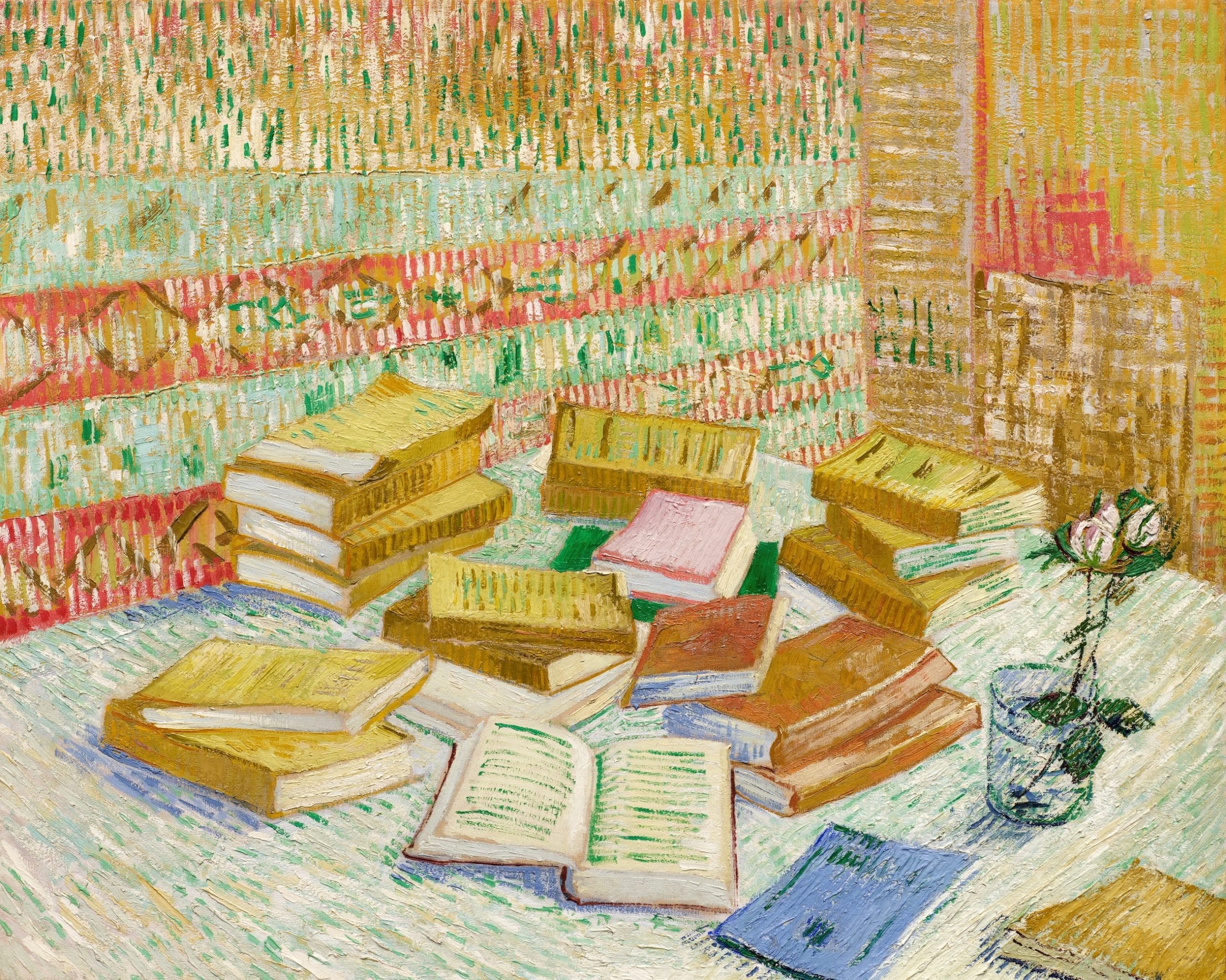
In 2024 I decided to start logging the books I read. This was partially to keep track of things that my feeble, aging memory was failing to do on its own, but also to have an opportunity to reflect on what I was reading (I did the same for films as well.) I am also wary of websites like GoodReads and Letterboxed because this is the most intimate data I can think of, and I would rather not want it in the hands of the tech overlords. Instead, I will give you some highlights that will hopefully give you some tips for your own reading, or maybe spark some conversation. In our increasingly ignorant and illiterate society I find the simple act of reading complex books and talking about them to be a transgressive practice.
Looking at my reading log, here are some of my noticings:
The Hardest Book I Read in 2025: Georg Wilhelm Friedrich Hegel, The Phenomenology of Spirit
Now that I teach philosophy in addition to history I have been trying to fill some gaps in my knowledge. I had read excerpts from Hegel in my undergraduate classes, but had never tried tackling a full text. One of my professors had joked that “I’ve been reading Hegel for twenty years and now I think I am actually getting it,” and that had scared me off. Well, that and the difficulty I had with the excerpts he gave us. This book is a true mind-bender, as Hegel seems to change his ideas in the course of writing an account of how consciousness itself has changed over time. I was not patient enough to fully parse parts of it, but reading it always felt energizing, as if I my mind was operating on a higher level than I had thought possible. I am actually thinking of re-reading it this year.
Book About the Present with the Most Insight: Anna Kornbluh, Immediatism, or the Style of Too Late Capitalism
Speaking of philosophy, last year I dipped back into Adorno for the first time in decades and found myself wanting more critical theory in my life. I picked up this book after having seen it in my favorite NYC book stores multiple times. (The author is also a mutual follow on social media.) It exceeded my high expectations by insightfully getting at the deeper structures of our cultural life (which is what all great critical theory does!) Kornbluh’s critique of the “immediatism” of our cultural life even had me questioning how I write on this Substack. I am trying to wean myself of too much unmediated, personal experience-based writing but today I have obviously failed! This is only more evidence for Kornbluh’s thesis. This book is also why I recently picked up a copy of Jameson’s Postmodernism, Or the Cultural Style of Late Capitalism, a hole in my knowledge almost as big as Hegel’s.
Runner Up: Cory Doctorow, Enshittification
New-to-me Classics I Enjoyed Most: Sinclair Lewis, Main Street, and Booth Tarkington, The Magnificent Ambersons
I had picked up a used, ratty mass market paperback of Main Street years ago, but its condition dissuaded me from reading it. This summer I bought a new trade paperback edition and was able to engage with it easier. I took the book with me on vacation, and it was surreal to read it while visiting my Nebraska small town home town, a place rather similar to the fictional Gopher Prairie, Minnesota. It was a little depressing to see that the suffocating aspects of small town Midwestern life described by Sinclair still remain. While in Indiana on the same vacation I picked up Ambersons, partially because I love Orson Welles’ filmed adaptation so much. Whereas Lewis was writing of a small Midwestern town and its provinciality, Tarkington was writing of the small Midwestern city and the changes wrought by the modernity (especially the automobile) not as evident in small towns. Tarkington’s book moved me by creating a character, George Minafer, who is so hateable yet so sympathetic when he has his downfall. These books were published in 1920 and 1918, respectively. In the midst of our own period of disruption it was interesting to read authors grappling with a similar moment 100 years ago. I highly recommend both books.
Best New Literary Novel: Karen Russell, The Antidote
This book is set during Nebraska in the Dust Bowl, an event important in my own family lore. While that biases me towards it, this book hardly has a sanguine attitude towards my homeland and its people. It’s really an account of how colonization and industrial agriculture did immense harm to the people and landscape of the Plains. Russell is good enough as a writer to avoid didacticism and to create fleshed-out, interesting characters. At a time of RETVRN and bullshit narratives about the past this novel sees things with much clearer eyes.
Runner Up: Sally Rooney, Intermezzo
Biggest Disappointment: David Graeber, Bullshit Jobs
I teach a Philosophy of Work unit and I was going to use Graeber’s eponymous article in class. I decided it would be good to read the book he wrote expanding on the concept and was sorely disappointed. It is incredibly sloppy, its “data” based on stuff his fans have emailed him. His proposal for a 15-hour week does not seem to take into account those of us teaching high school students, or anyone besides office workers, for that matter. Graeber is correct in his central insight that so much work in the modern, bureaucratic corporation is indeed bullshit, but he also reveals the fundamental soft-headedness of anarchism.
Best New Genre Novel: Nick Harkaway, Karla’s Choice
Because I am such a huge fan of Mick Herron’s Slow Horses series I read all four of his “Oxford Series” novels this year. As much as I enjoyed them, he was still finding his voice in these early works. On the other end, I read Fever Beach, Carl Hiaasen’s most recent novel. As always I laughed plenty and liked the book (especially the political commentary), but he’s done better. It would have been my top choice if not for my recent reading of Karla’s Choice. Harkaway is the son of the late John Le Carre (one of my favorite authors) and a skilled writer in his own right of science fiction. Here he wrote a book in the world of his father’s most character, the unassuming spy master George Smiley. I normally hate continuation novels but I gave this a try after hearing an interview with him and praise for the book from true Le Carre heads. While his prose is not as rich as his father’s (whose is?) he draws characters so well and genuinely surprised me with the plot twists. If you are a fan of Tinker Tailor Soldier Spy, read it.
Runner Up: Carl Hiaasen, Fever Beach
Book I Took the Most From In My Own Life: Mara van der Lugt, Dark Matters: Pessimism and the Problem of Suffering
No philosophical question has taxed my mind more than the so-called “problem of evil.” It shook my faith as a child and still bedevils me today when I see so many wonderful people in my life dying young or suffering from horrible ailments while the worst people alive seem to be in charge of our government and economy. Van Der Lugt’s book looks at the history of the debates over the problem of evil in Enlightenment-era philosophy and makes a convincing case for a redefined philosophical pessimism. By pessimism she does not mean a negative outlook on the future, but an acknowledgement of the universe’s cruel indifference. While normies might find this depressing, I agree with her that this assumption leads us to be kinder to our fellow sufferers stuck on this rock.
Runner Up: Viktor Frankl, Man’s Search for Meaning (this was a reread so I did not give it the title)
Book I Got the Most Out of Rereading: Chinua Achebe, Things Fall Apart
I use this book in my Modern World History class. I enjoyed revisiting it last year, but this year it hit me even harder. As with the van der Lugt book it examines the cruelty of fate, and like Tarkington it gets at the human costs of modernity’s disruptions. This book is such a triumph in how it creates an inner world for premodern villagers who are often not granted one in our culture. I look forward to reading it again next year.
Runners Up: Homer, The Odyssey, Gore Vidal, Burr
Best American History Book I Read: Linda Gordon, The Great Arizona Orphan Abduction
My Americanist friends went hog wild over this in grad school and I now see why. It has a lot to say about race, immigration, and class while getting at the unique perspective of Mexican Americans in a border region in the 20th century that was still a territory. I think this book has a lot to say about the current political dynamics in this country, as well as the expanding and contracting definitions of “whiteness.”
Runners Up: Alan Taylor, American Civil Wars and Anthony Kaye with Gregory Downs, Nat Turner: Black Prophet
Best World History Book I Read: Gregory T Cushman, Guano and the Opening of the Pacific World: A Global Ecological History
I am trying to incorporate the Pacific more into my world history course and I learned so much from reading this book. I knew vaguely of the importance of guano, but not of the so-called “Blue Revolution.” I also learned a lot more about the Green Revolution and in general am energized to do more with environmental history in my classes.
Runner Up: Aleksandr Fursenko and Timothy Naftali, Khrushchev’s Cold War
Best New-to-Me Book of Essays I Read: Olivia Laing, Everyone: A Book About Freedom
I loved Laing’s earlier book on loneliness and this one definitely met my expectations. She combines intellectual and literary figures in such interesting and unexpected ways and seeks deeper insights over facile observations. It was also a sad book to read since it came out in 2020 and spoke to the possibilities of radical freedom on people’s lips back then during the turning point that failed to turn. This year I also revisited some great books of essays by Emerson and Joan Didion. There’s nothing like a good essay to crystallize an essential thought. Too bad AI is killing the ability for my students to do it.
Runner Up: Marilynne Robinson, The Given-ness of Things: Essays
Author Who Most Excited Me: Henry David Thoreau
As I wrote about in an earlier essay, reading Thoreau has really energized me this year. He understood our modern dilemma so well, and offered a way to both reject the corrupt and anti-human nature of our society while still taking action to change it. He did not just retreat to the woods. Thoreau assisted runaway slaves for the Underground Railroad, he gave speeches defending John Brown, he went to jail to protest the Mexican War and its expansion of slavery. This duality has been an inspiration for me. Having read all of his regular books already, this year I delved into his essays and his journal. The latter is something I know I will return to.
here's to the joys 2026 will bring, and the strength to survive the rest!